 721 puzzles in the app
Nearly every pawn that reaches the last rank becomes a queen. Underpromotion puzzles are about the exceptions: positions where a knight, rook or bishop is the only winning choice, and a queen would let the win slip away or even give stalemate. They’re rare in real games, which is exactly why they’re worth training. When the moment comes, you want to recognise it instead of picking the queen on autopilot.
The rules give you full freedom here. A promoting pawn can become a queen, rook, bishop or knight of your colour, no matter which pieces are still on the board. The question in these puzzles is simply which one does the job.
Why choose a knight
A knight attacks squares that a queen standing on the same spot does not, so knight promotions are the most common underpromotions in tactics. The usual reasons:
- A fork with check. Imagine a white pawn on d7, Black’s king on e6 and Black’s queen on b7. After d8=N+, the new knight checks the king and attacks the queen at the same time, and the queen falls next move. A queen on d8 wouldn’t give check at all.
- An immediate mate. Sometimes the only way to check a boxed-in king is with a knight, because a queen on that square doesn’t attack it.
- Winning a tempo. A knight check can buy exactly the move you need to stop the opponent’s own threats.
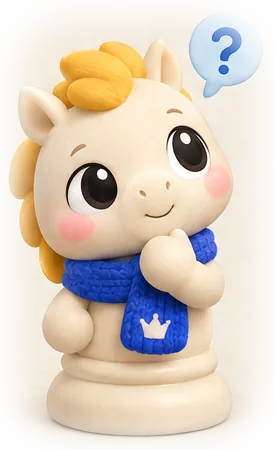
Springer, MateMind’s clay knight, naturally has a soft spot for this theme.
Why choose a rook or bishop
Rook and bishop promotions are almost always about stalemate. When the defending side has very few moves, a new queen can take away every remaining square without giving check, and the game ends in a draw on the spot. A rook covers ranks and files but not diagonals, so it can leave the king one legal move while still doing the mating work a move later. A bishop promotion is the rarest of all; it appears when both a queen and a rook would stalemate but a bishop leaves a square free and still wins.
Spotting the moment
Pause whenever a promotion is part of the solution and ask two questions. First, does a queen on that square give check, and if not, would a knight? Second, after promoting, does the opponent still have a legal move? If the defender is down to a king and a few blocked pawns, stalemate is a real danger.
Typical cues include an enemy king and queen both a knight’s jump away from the promotion square, a cornered king hemmed in by its own pieces, and endgames where your opponent has nothing left but a king and pawns that can’t move.
Common mistakes
- Promoting to a queen automatically. Most underpromotion puzzles are built around exactly this reflex.
- Choosing a knight for the fork but missing that the opponent can capture it first or ignore it with a bigger threat.
- Forgetting the stalemate check after promotion. Count the defender’s legal moves, not just your own threats.
Practical tips
Treat the promotion square like any other square: which enemy pieces would each possible piece attack from there? Picture all four options, not just the queen. And if a puzzle seems to have no win after promoting to a queen, take that as a strong hint that a different piece is the answer.
These positions don’t come up often, but when they do, knowing the idea can turn a draw into a win and a win into a beautiful one.