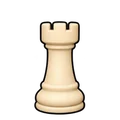
What a Rook-rank player brings to the board
At 1500 and above, you’re no longer surprised by most tactical ideas. You see two motifs working together, you look for in-between moves, and you can follow a forcing line three or four moves deep without losing track of where the pieces are. Mate in 2 is usually comfortable, and many mate in 3 puzzles are within reach.
You’ve also learned that a puzzle doesn’t end with your first strong move. You think about the reply, and that habit alone is worth a lot of rating points.
Where the points slip away
Puzzles in this range are built around the moments that still trip up experienced players.
Choosing among candidates. Often two or three moves look promising, and only one truly works. Players here tend to fall in love with the first idea. Make a short list of candidate moves first, then calculate each one.
Puzzles where you must defend. Sometimes the position isn’t about winning material but about finding the only move that saves the game. These feel unnatural if you always hunt for attacks.
Endgame technique. Many players climb this far on middlegame tactics alone, then lose points when the board empties. Endgame puzzles demand accuracy over several moves, and one careless king step can turn a win into a draw.
Skills that open the door to Queen
- Clearance. Sometimes your own piece blocks a line or square that another piece needs. Moving it with tempo, often as a sacrifice, opens the path.
- X-ray attacks. A rook or queen can exert pressure through an enemy piece, so that once it moves or is exchanged, the line beyond comes alive.
- Desperado. When a piece is lost anyway, let it take as much as possible on the way out.
- Promotion and underpromotion. Learn to see when a pawn on the seventh rank decides the game, and when promoting to a knight, giving check or a fork, beats promoting to a queen.
- Rook endgames. These are the most common endings in practice. Learn the Lucena position, where the stronger side builds a bridge with the rook to shelter the king from checks. Learn the Philidor defense too, where the defender keeps the rook on the third rank and switches to checks from behind once the pawn advances. Cutting off the enemy king along a file is often the first step to winning.
How to train at this level
Quality beats volume now. A daily goal of 10 well-calculated puzzles beats 20 rushed ones. A sustainable routine:
Start with the daily puzzle to warm up your eyes. Then spend one session a week entirely on endgame themes, since that’s where many Rook-rank players can gain the most. On other days, alternate between Training mode and a theme you’ve only reached bronze or silver in. And treat every reviewed mistake as a small lesson: ask why your move failed, not just what the right move was.
Moving up
Rook II starts at 1600, Rook III at 1700, and Queen waits at 1800. Each step earns a celebration from Springer and a few lightbulbs, and your displayed rank stays at Rook I or higher from here on.